The opportunity to reframe medical education is an exciting prospect, especially for early-career physicians whose training is not that far in the rearview mirror. That may explain why 5 of the 18 American Board of Medical Specialties (ABMS) Scholars in the 2025–2026 class are conducting research on Competency-Based Medical Education (CBME).
“The fact that nearly one-third of the ABMS Scholars chose to research CBME speaks to the outcomes-oriented approach’s importance in training leading to board certification and unsupervised practice,” noted Susie Flynn, Director of Certification, Standards and Programs at ABMS, who administers the ABMS Scholars Program™. The one-year, part-time research program supports early-career physicians and researchers in scholarship and leadership development focusing on initial and continuing board certification.
 Competency-centered learning is a critical underpinning of medical education, notedRuchi Thanawala, MD, MS, FACS, an Associate Professor of Thoracic Surgery at Oregon Health and Science University (OHSU). “Being a part of studying and reframing medical learning from a competency viewpoint is exciting,” she said. Dr. Thanawala is examining how resident self-assessment compares to faculty assessment for all 18 American Board of Surgery (ABS) general surgery Entrustable Professional Activities (EPAs) temporally by postgraduate year in the national dataset of more than 140,000 faculty and resident paired self-assessments. “The question I hope to answer is what the gap in self-assessment is and then to study self-assessment as an independent competency,” she said, referring to her research project that is sponsored by the ABMS Research and Education Foundation.
Dr. Thanawala, who is also Director of the Surgical Data and Decision Sciences Lab in the OHSU Department of Surgery, Associate Program Director of the Clinical Informatics Sub-specialty Fellowship, and Co-Lead of Innovation & Collaboration Core at the Center for AI-Enabled Learning Health Science, was familiar with CBME before pursuing her research project, but has since become immersed in the topic thanks to working with other ABMS Scholars.
 For Maria Martinez-Lage, MD, Assistant Professor of Pathology at Harvard Medical School, her understanding and now passion for CBME started around 2019 when she was first introduced to the Promotion in Place Model for Competency-Based, Time-Variable Graduate Medical Education funded through the American Medical Association Reimagining Residency initiative. Collaborating on that initiative through a pathology pilot provided her with opportunities to interact with other teams working on CBME implementation in diverse institutions and settings. Her research project, sponsored by the ABMS Research and Education Foundation and The Gordon and Betty Moore Foundation, focuses on developing a virtual platform that mimics the real-life experience of a neuropathologist in their main diagnostic activity, known as sign-out, during which a pathologist reviews cases and issues diagnostic reports. After a fellow is presented with a series of cases, the virtual platform will be used to assess their diagnostic accuracy, ability to craft a complete and clear report, and appropriate use of ancillary testing, ultimately providing a measure of their competence as diagnostic neuropathologists.
“CBME is a framework that makes sense, and I’m excited to be part of the teams that are moving the needle toward implementation of CBME in graduate medical education,” said Dr. Martinez-Lage, who is also the Program Director of both the Pathology Residency Program and Neuropathology Fellowship Training Program at Mass General Brigham.
 Samantha Minnicozzi, MD, Associate Professor in the Division of Pediatrics Respiratory, Allergy, and Immunology at the University of Virginia School of Medicine, is developing specialty-specific EPAs and implementing a pilot at the institution for her research project sponsored by the American Board of Allergy and Immunology. Dr. Minnicozzi was very familiar with CBME in the undergraduate medical education space as she teaches and precepts medical students at the University. “CBME has been widely adopted within undergraduate medical education and is gaining momentum in graduate medical education more recently,” she said. While it is at varying stages of development and implementation within graduate medical education (GME), CBME is an approach that teaches what trainees (and future peers) should achieve prior to graduation. Dr. Minnicozzi looks forward to expanding the pilot to other institutions in the future.
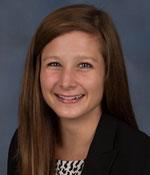 The George D. Wendel, Jr., MD Scholar Alexandria Kraus, MD, MMSc, Assistant Professor of Maternal Fetal Medicine in the Department of Obstetrics and Gynecology at the University of North Carolina School of Medicine, had a strong foundational understanding of CBME because of her Master’s in Medical Education and previous engagement in workplace-based assessment prior to becoming an ABMS Scholar. Dr. Kraus’ research project, sponsored by the American Board of Obstetrics and Gynecology, focuses on developing and piloting an EPA for operative vaginal delivery. The goal is to develop an assessment tool that more accurately captures trainees’ readiness for this procedure, including clinical reasoning, communication, real-time decision-making, and the level of supervision required. “Operative vaginal delivery is a high-stakes obstetric skill for which case numbers and procedural exposure alone do not adequately reflect competence,” she said. “A competency-based approach allows us to determine whether trainees can safely integrate medical knowledge, technical skills, and systems-based practice into their everyday clinical care,” Dr. Kraus added.
 “CBME is generally more directly aligned with the work physicians do every day, making it very meaningful and satisfying from a patient care and professional development perspective,” noted Rebecca Williams-Karnesky, MD, PhD, MEdPsych, Assistant Professor in the Division of Surgical Oncology and Associate Program Director for the General Surgery Residency at the Feinberg School of Medicine at Northwestern University. Her research project, sponsored by ABS, focuses on developing an implementation science-based toolkit to increase engagement with EPAs in general surgery. The idea was borne out of her involvement with an ABS working group tasked with understanding the facilitators and barriers encountered by residency programs enrolled in the ABS pilot study of the general surgery EPAs. Despite most faculty and residents conceptually agreeing that the EPAs were a valuable addition to training and were not overly burdensome to complete, they did not always complete the EPA assessments. “It really opened my eyes to the power of potentially using an implementation science-based approach to move educational innovations into practice,” she said.
All these Scholars are grateful to the ABMS Scholars Program for enabling them to deepen their knowledge of CBME from connecting with national experts to translating CBME principles into practical, implementable assessment strategies for this outcomes-based approach that they expect will be widely adopted in GME across specialties in the future.
“CBME is helping GME programs more deliberately focus on what trainees can actually do in clinical practice and what support they need to continue growing,” Dr. Kraus said. “I believe it will enhance the quality of feedback and supervision, promote individualized learning, and improve decisions about readiness for independent practice,” she added.
“As a residency and fellowship program director, I believe we have a responsibility to produce graduates who are ready for independent practice, when they are ready, and I believe the tools that CBME provides help us assess their readiness in meaningful ways during training,” Dr. Martinez-Lage stated. This increased accountability and confidence reassures program directors that we are meeting the needs of patients and the public, which is a tenet of CBME, she added.
Not the First ABMS Scholars to Plunge into CBME Pool
Eager to reframe medical education using CBME, ABMS Scholars from the 2025–2026 class join others from past cohorts who are equally as passionate to improve medical training.
Among the ABMS Scholars who are making important contributions to advance CBME knowledge across the specialties are Benjamin Kinnear, MD, MEd, from the class of 2022–2023, and Brenessa Lindeman, MD, MEHP, FACS, from the class of 2018–2019. They provided a primer and update on CBME at the Accreditation Council for Graduate Medical Education-ABMS CBME Learning Community Symposium held this May in Chicago. Dr. Minnicozzi presented alongside Michael R. Nelson, MD, PhD, President of the American Board of Allergy and Immunology, about the specialty’s efforts to develop and pilot EPAs. Past presenters at the Symposium and annual ABMS Conference include Holly Caretta-Weyer, MD, MHPE, from the class of 2021–2022, and Daniel J. Schumacher, MD, PhD, MEd, from the class of 2014–2015, who will be awarded the first-ever ABMS Distinguished Scholar Award at ABMS Conference 2026. Read more about their efforts to advance CBME.
© 2026 American Board of Medical Specialties
Connect to the ABMS Community
ABMS Insights is our free newsletter featuring news about board certification and the 24 certifying boards that compose ABMS. Read the latest issue and sign up to receive future updates about board certification.
ABMS Announces a Record Number of ABMS Scholars for the 2026-2027 Cohort
September, 14 2026
The American Board of Medical Specialties (ABMS) has selected a record number of 23 outstanding physicians to participate in its 2026-2027 Scholars
CBME Making its Way Across the Specialties
September, 2 2026
ABMS Member Boards are collaborating with others in their respective specialties by supporting and exploring the adoption of CBME.
Building a Community of Practice Around CBME
September, 2 2026
For the past five years, the Accreditation Council for Graduate Medical Education (ACGME) and American Board of Medical Specialties (ABMS) have held